

What Makes the Island of Bonaire So Different
from Other Caribbean Destinations?
The Caribbean contains some of the most beautiful and intensely marketed travel destinations in the world. Islands that have built entire economies around white sand, rum cocktails, and resort pools. Islands where the coral reef has been photographed for the brochure but not necessarily protected in practice. Islands where the 'authentic Caribbean experience' is a carefully curated product designed to feel spontaneous.
And then there is Bonaire. Small, unassuming, largely unflashy, and genuinely different in ways that matter to the traveller who is looking for something more than a backdrop for photographs. Understanding what makes Bonaire unique helps explain why divers return here year after year, why naturalists and photographers seek it out, and why the visitors who come expecting a typical Caribbean holiday sometimes find themselves rethinking what a great island trip can actually be.
1. The Reef Is Not a Selling Point. It Is the Whole Island.
On many Caribbean islands, the reef is a feature — one among many. You can snorkel, sure, or take a glass-bottom boat trip. But the island's identity is built around beaches, hotels, restaurants, and nightlife. The reef is just something in the water.
On Bonaire, the reef is the island. The entire tourism economy, the conservation infrastructure, the character of every dive shop and hotel, and the daily rhythm of many visitors' lives is organised around the Bonaire National Marine Park. The reef begins at the shore on nearly the entire western coast. Walking into the water with a mask and fins is not an excursion; it is something you do before breakfast.
This is not merely a difference of degree. It is a difference of kind. Bonaire is, functionally, a dive island that happens to have accommodation, restaurants, and a charming small capital. The reef is primary. Everything else is secondary.
2. Marine Conservation Came First Four Decades Ago
Bonaire established its marine park in 1979, making it one of the earliest marine protected areas in the entire Caribbean. The rules that followed no anchoring on coral, no touching marine life, mandatory dive fees funding conservation, ranger patrols were not popular with every operator or visitor when they were introduced. Over four decades, they produced one of the healthiest reefs in the Western Hemisphere.
Most Caribbean coral reef systems have lost between 50 and 80 percent of their coral cover over the past 30 to 40 years due to bleaching, coastal development, pollution, and overfishing. Bonaire's reef, while not immune to climate pressures, retains extraordinary health and vitality by any regional standard. The fish are numerous and unafraid. The corals are large and genuinely alive. The marine biodiversity rivals that of reefs in the Indo-Pacific the global gold standard.
Long-term marine protection is the single most important reason Bonaire's reef is so exceptional. It is also the clearest example of why Bonaire is different: the island chose conservation before commerce, and the decision has compounded in value every year since.
3. Flamingos Live Here. Actually Live Here
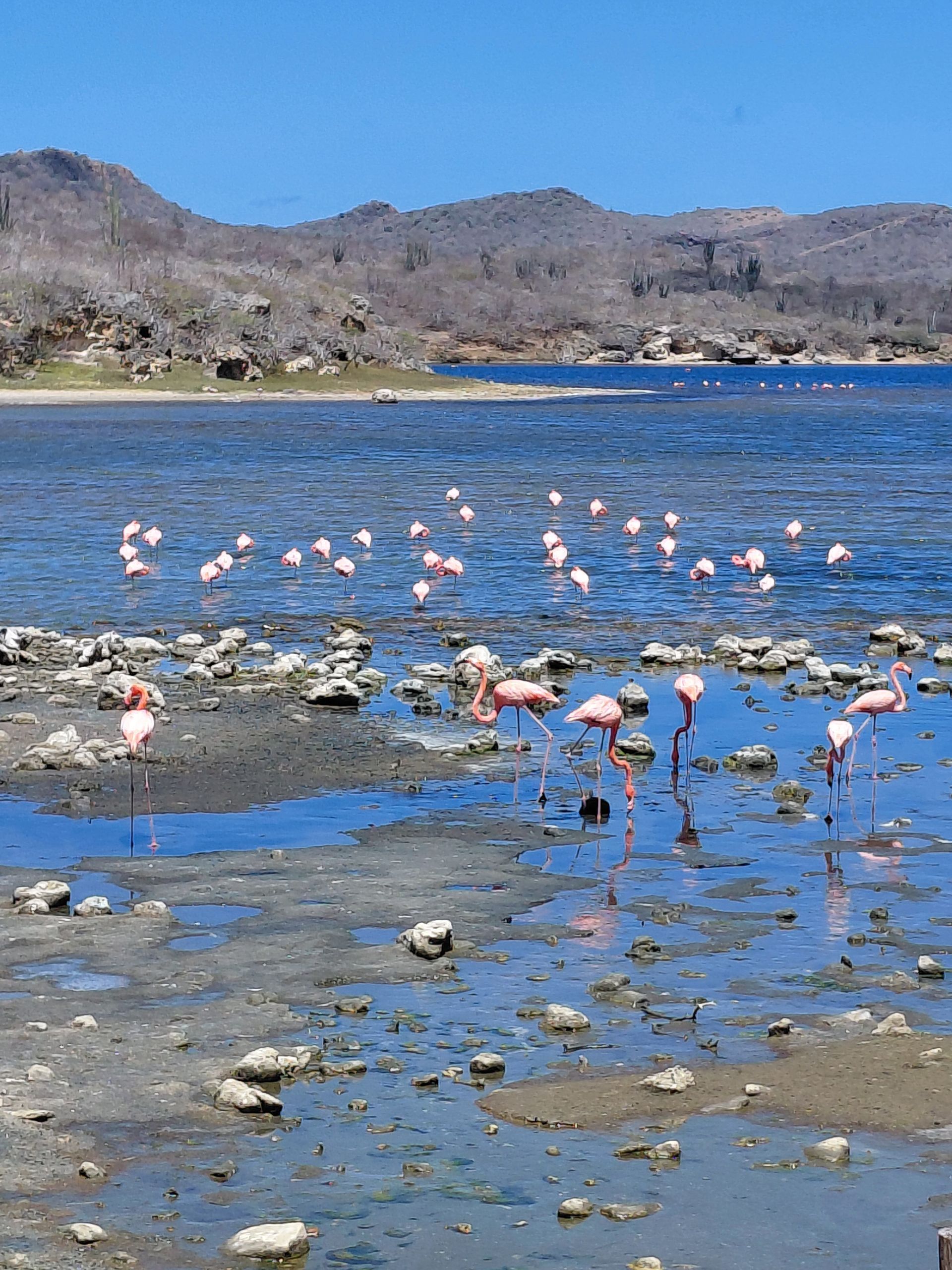
Bonaire is home to one of the largest and most stable flamingo colonies in the Western Hemisphere. Approximately 1,500 flamingos breed and feed on the island, primarily in the salt pans at the southern tip (managed by Cargill) and in the lagoons of Washington Slagbaai National Park in the north.
These are not zoo flamingos or resort flamingos. They are wild birds, living out their complete life cycle on the island breeding, nesting, raising chicks, and feeding in the shallow saline waters that Bonaire's flat southern geography provides. Seeing flamingos in the salt flats against the backdrop of white pyramids of harvested salt and a darkening Caribbean sky is one of the most purely strange and beautiful experiences available anywhere in the region.
Bonaire is one of only a small number of places in the world where flamingos breed with this regularity and in these numbers. It is a fact that most visitors even repeat visitors to the Caribbean — do not know until they arrive and find the birds feeding at the roadside.
4. The Landscape Is Unlike Anything Else in the Caribbean
Caribbean islands broadly sort into two landscape types: lush volcanic mountains (St Lucia, Dominica, Martinique) and low coral limestone platforms (the Turks and Caicos, the Caymans, Aruba). Bonaire is the latter, but with a character entirely its own.
The interior of the island is dry scrubland: cactus forest, acacia, and divi-divi trees bent permanently by the trade wind. There are no rivers and no freshwater lakes, and a lot salt water lakes. Rainfall is low, averaging around 550mm per year and the vegetation has adapted accordingly. Washington Slagbaai National Park in the north covers 5,643 hectares of this landscape and protects both the terrestrial and coastal ecosystems in a largely untouched state.
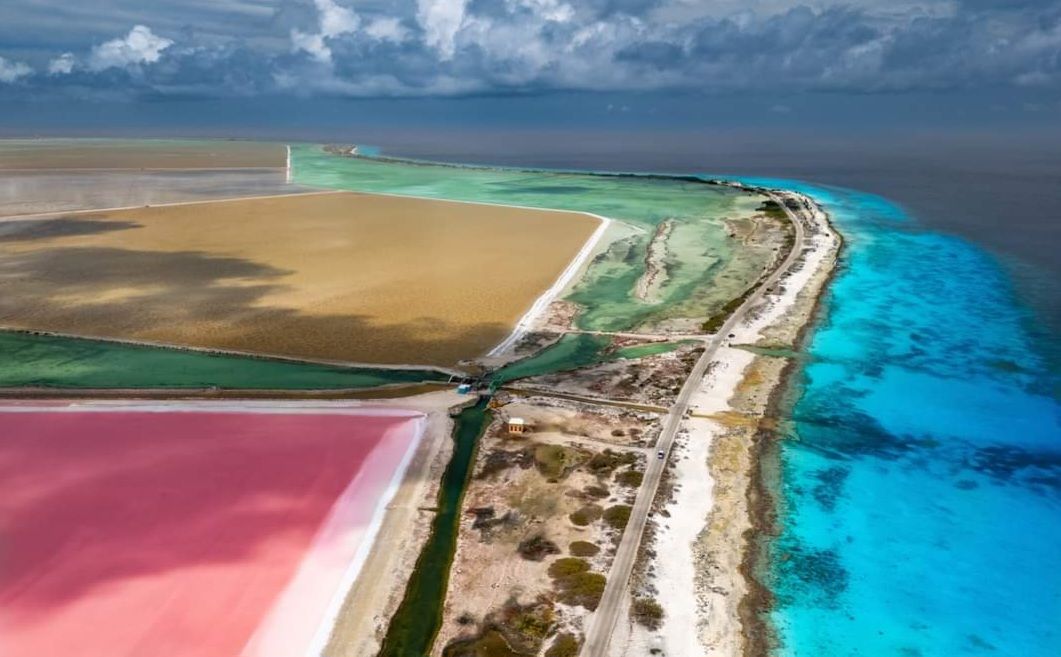
The southern tip of the island is salt flat territory a landscape that belongs more to a fever dream or a painting than a conventional Caribbean postcard. Pink lakes, white salt pyramids, and wide, flat horizons that extend uninterrupted to the sea. This is a working industrial landscape (Cargill harvests salt here commercially) that happens to also be one of the most visually distinctive environments in the Caribbean.
Washington Slagbaai also harbours significant bird populations Parakeets, Lora’s, Hummingbirds, Pelicans, Ospreys, and dozens of migrating species making the park an excellent destination for birders and naturalists who want something beyond the reef.
5. Bonaire Is Not a Party Island
This might read as a negative. For many travellers, it is one of the island's most attractive features. Bonaire has no large resort casino, no organised nightlife strip. Kralendijk, the capital, has good restaurants, a handful of bars, and the relaxed social warmth of a small town where everybody either works in tourism or knows someone who does. Bonaireans are known for their warm hospitality, you’ll often be greeted with a friendly smile wherever you go.
The tourism economy here is built around divers, nature enthusiasts, and visitors seeking quality of experience rather than volume of amenity. The island caters well to this audience. What it does not offer and makes no particular effort to offer is the mass-market resort infrastructure that dominates islands like Aruba or Curaçao. Bonaire is genuinely quiet. In much of the Caribbean, that description would be a euphemism for underinvestment. On Bonaire, it is a deliberate and sustainable choice.
6. The Geology Makes It a World-Class Dive Destination
Bonaire sits on the continental shelf that borders the Venezuelan coast, giving the island a geological profile quite different from the volcanic arc of the Lesser Antilles. The fringing reef on the western coast drops from shallow to deep in a consistent, navigable slope that suits all levels of diver. The water clarity — routinely 30 to 40 metres of horizontal visibility results from the combination of low river runoff (there are no rivers), trade wind circulation, and limited coastal development reducing sediment and nutrient pollution.
The combination of geological position, water chemistry, and protection history has produced a reef environment that professional divers, marine biologists, and underwater photographers rate among the very best in the world. The 2021 PADI Divemaster survey ranked Bonaire the number one shore dive destination globally for the seventh consecutive year a statement that reflects the island's extraordinary consistency.
Experiencing Bonaire's Uniqueness from Palm Paradise
Palm Paradise Bonaire is designed for travellers who want to experience what makes the island genuinely special not a resort version of it, but the real thing. The property places you close to the reef, close to the wildlife, and close to a team of people who understand and love the island. Whether you are here for the
diving, hiking, the flamingos, the silence, or all three, Palm Paradise gives you an honest and well-supported Bonaire experience.
Frequently Asked Questions
Is Bonaire better than Aruba and Curaçao?
That depends entirely on what you are looking for. Aruba and Curaçao offer more nightlife, more resort infrastructure, and more developed tourism industries. Bonaire offers better diving, better snorkelling, rough nature, more wildlife, and a quieter, more authentic experience. For nature-focused travellers and divers, Bonaire is consistently rated the best of the three ABC islands.
Is Bonaire an expensive destination?
Bonaire is mid-range by Caribbean standards. It is less expensive than the British Virgin Islands or St Barts, roughly comparable with Curaçao, and more expensive than some non-Dutch islands. The Stinapa Nature Fee, and de Tourist Tax fee are an additional cost for visitors. Self-catering accommodation and truck-based shore diving can significantly reduce overall trip costs.
Do flamingos really live wild in Bonaire?
Yes. Bonaire hosts one of the largest wild flamingo colonies in the Western Hemisphere. They breed and feed year-round in the salt pans in the south and in the lagoons of Washington Slagbaai National Park in the north. Sightings are reliable rather than occasional.
Conclusion
What makes Bonaire different is not any single feature but the combination of all of them: a reef that was protected before most Caribbean nations had written their first marine conservation laws; flamingos that live and breed wild rather than posing for resort brochures; a landscape that belongs to no Caribbean cliché; and a quiet that is not an absence of investment but a reflection of values. Bonaire is a rare thing: an island that has decided what it is, and succeeded in remaining exactly that.

